

Crescat Capital commentary for the month of January, 2025, titled, “third wave of the US dollar cycle.”
We think the gold panic on Friday on the announcement of Kevin Warsh as the new Fed Chair caused a healthy pullback from short-term overbought conditions in the precious metals markets. While Warsh may appear the least dovish among President Trump’s candidates, we believe he is indeed in favor of lowering interest rates in 2026, as the President has also affirmed. Investors in Crescat’s portfolio of undervalued precious and critical metals miners should not be too concerned. Our activist mining portfolio outperformed gold, silver, and the gold equity benchmarks, both on Friday and cumulatively for the month of January. Performance was helped by our second largest position, Tectonic Metals, following company specific news, which rose 28% (gross) on Friday with spot gold down 9%. While this was only a snapshot in time, that’s alpha! We think Tectonic’s Flat Project in Alaska may be one of the most exciting big new gold discoveries on the planet. Everyone should check out the latest drill results in their last two news releases.
Still, the gold correction was no small matter. We think it presents a buying opportunity. In fact, now, as much as ever, is the time for gold investors not to panic but to step back and look at the big picture.
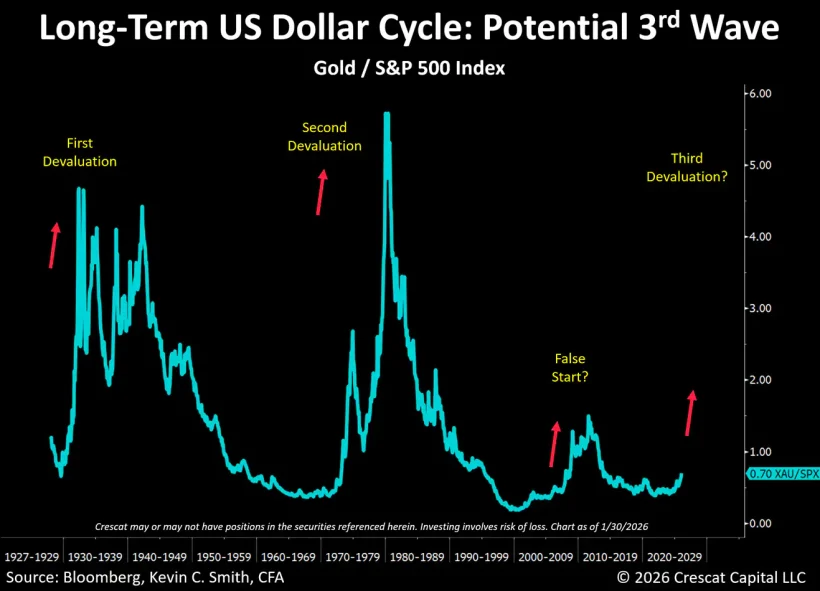
We believe we are on the cusp of the third devaluation wave of the long-term US dollar cycle. The first wave was during the Great Depression, when President Franklin D. Roosevelt issued Executive Order 6102 on April 5, 1933, requiring Americans to surrender most of their privately held gold to the Federal Reserve by May 1, 1933. He then officially devalued the dollar by raising the gold price from $20.67 to $35 per ounce on January 31, 1934. The second major wave began on August 15, 1971. That was when President Richard Nixon announced the closing of the “gold window”, which ended both the direct convertibility of the U.S. dollar to gold for foreign governments as well as the Bretton Woods system of fixed exchange rates.
The new millennium began with a false start of a third wave as gold rose and the dollar index fell, both during the early 2000s tech bust and then leading up to the 2008 Global Financial Crisis. Since that time, however, US debt and deficit imbalances have grown to historic levels. So have valuations for US technology companies and large cap indices. Based on fundamental measures, S&P 500 market multiples now rival those of major market peaks in 1929, 1972, and 2000. To get comfort that it is only the beginning, not the end of this new macro cycle, one must step back and look at the long-term cycle for gold, the dollar, and the S&P 500 Index, which we show in the chart above.
We are confident that the Great Rotation, which we have been writing about for several years now, is only in its very early innings. We are talking about the global investor rotation into precious and critical metals, resource equities, and foreign markets, and out of US megacap tech, US large cap stock indices, and the US dollar. We think it’s a great opportunity for investors who have been misaligned and missing out to get positioned, still well ahead of the curve.
A New Bretton Woods Realignment
Prior to his appointment as US Treasury Secretary, Scott Bessent spoke of potential new Bretton Woods alignment in terms of global policy and trade. Others, including Fed governor Stephen Miran, dubbed such a plan a Mar-a-Lago Accord to address the U.S. current-account deficit, revitalize manufacturing, and rebalance global trade. The plan relies on trade and security alliances with Western geopolitical allies, and a weaker U.S. dollar, achieved through international coordination and by using tariffs as leverage to pressure trade partners. We believe the Mar-a-Lago Accord is in full motion. Since President Trump’s inauguration day, January 20, 2025, the US Fed Trade Weighted Dollar Index is down 7.3%. But one major currency, the Japanese yen, has yet to cooperate, until just one week ago. It is not improbable, as a new part of the US-Japan trade deal, that a coordinated policy effort is now in play to appreciate the yen relative to the dollar.
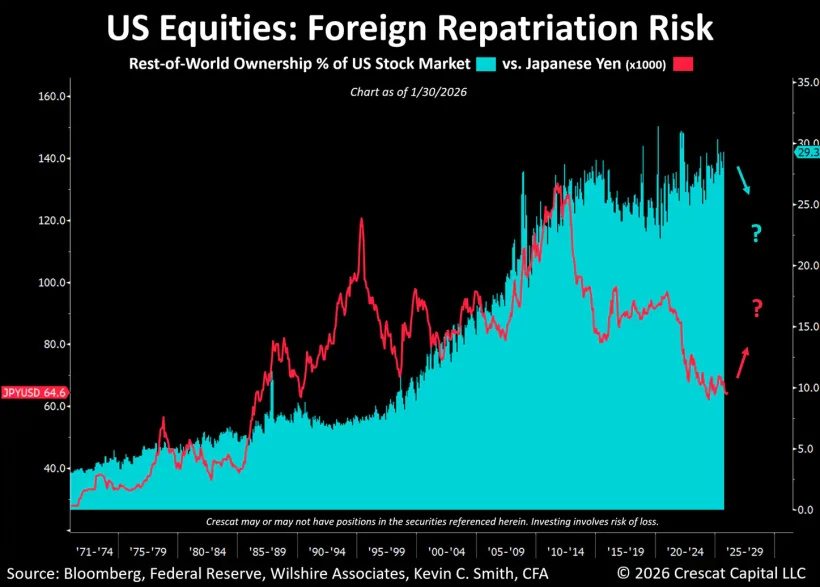
We are concerned that one of the potential unintended consequences of the Mar-a-Lago accord, and its likely new dollar vs. yen focus, could be the bursting of the US large cap equity bubble. This could occur both from foreign repatriation as well as from US domestic capital flight in a newly recognized weak dollar regime. Since the end of the Bretton Woods fixed exchange rate era, as US trade deficits have soared, foreign ownership of US equities has grown from 3.2% to 29.3% of the total US stock market, as we show in the chart above. Foreign capital inflows over this period have been a persistent factor contributing to now-record US stock market valuations. So, if there really is now a new coordinated effort to devalue the dollar, shore up US manufacturing, and improve the US current account, it’s time for investors to bone up on concepts such as the Triffin Dilemma and the Impossible Trinity. To summarize our take on them, in a non-fixed exchange rate system with new FX trends emerging, one should not underestimate the role that foreign capital flows can play in financial markets.
The Gold Majors
The broadly based outperformance of the senior gold miners throughout 2025 has naturally prompted a key question for investors. Is this strength sustainable into 2026 and beyond, or has the train left the station? In our view, the current move is one of an early phase of a multi-year cycle, rather than a late-cycle surge. Importantly, we believe the leadership displayed by the majors in 2025 is likely to filter down the market-cap spectrum, creating attractive conditions for the junior and development-stage segment as the cycle continues.
Despite the bull run in 2025, the majors are not exhibiting the type of “stretched” multiples that typically coincide with cycle peaks. Below is a chart from Bloomberg Intelligence showing the current, 10-year low, 10-year average, and 10-year high EV to EBITDA ratios of several major gold miners as of 11/17/2025. Across the board, they are currently trading much closer to the 10-year average, rather than the high. In other words, while price performance has been compelling, the market has not yet priced these companies as though we are nearing an end-stage exuberance phase. From a valuation standpoint, the sector still appears to have meaningful upside ahead.
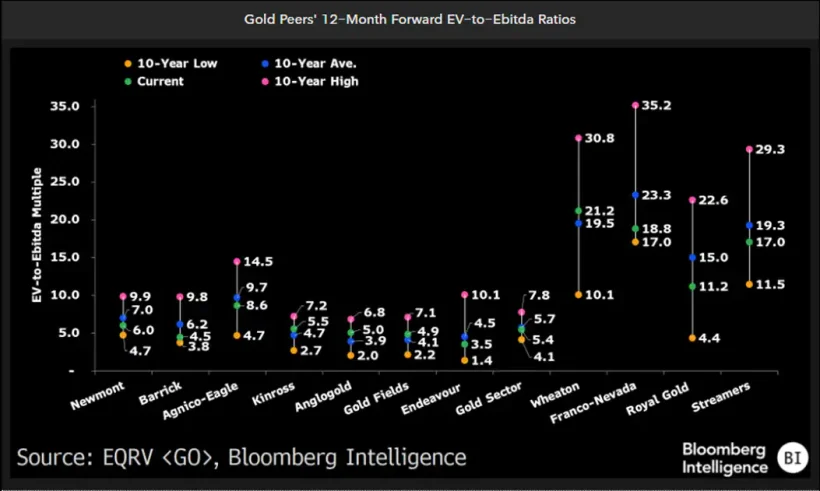
Crescat may or may not hold positions at any given time in the securities referenced. This is not a recommendation or endorsement of any secure or other financial instrument. Investing involves risk, including risk of loss. Chart as of 11/17/2025
Robust Margins
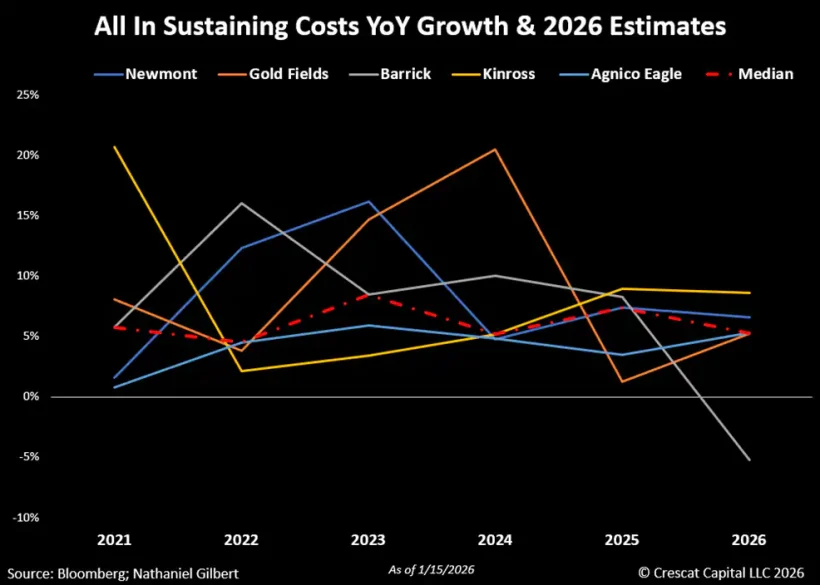
Of course, a significant portion of the majors’ success can be attributed to the sharp appreciation in gold and broader precious metals pricing. However, what has been equally important has been the majors’ ability to maintain cost discipline through a period where many industries continued to struggle with inflationary pressures. All-in-sustaining costs (AISC) are the total cost per ounce of producing gold, including sustaining capital expenditures, general and administrative costs, exploration and evaluation costs, and environmental rehabilitation costs. At the median, the AISC for Newmont, Gold Fields, Barrick, Kinross, and Agnico Eagle grew by about 7% in 2025, well under the price appreciation of gold for the year, and analysts are projecting about 5% growth for 2026. In a commodity-driven business, the widening spread between gold prices and operating costs is the core engine that drives profitability.
Crescat may or may not hold positions at any given time in the securities referenced. This is not a recommendation or endorsement of any secure or other financial instrument. Investing involves risk, including risk of loss.
Record Balance Sheet Strength
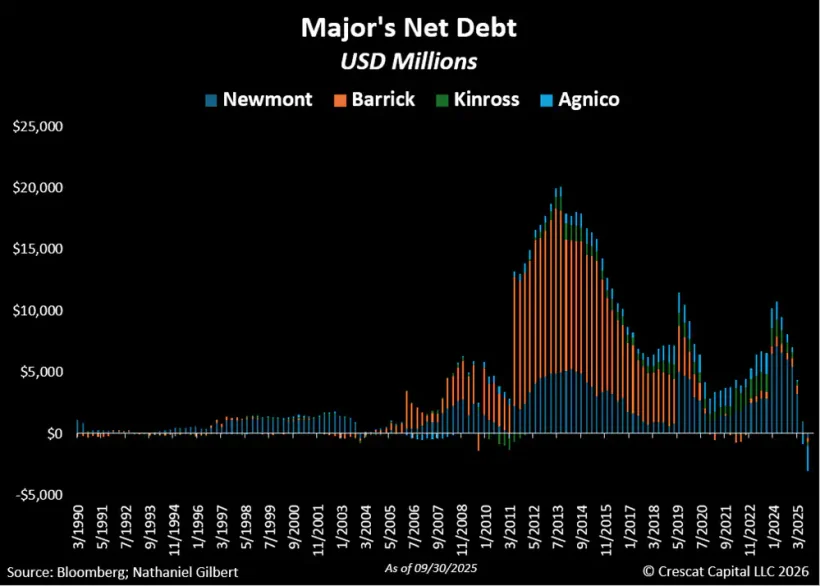
The benefit from the widening spread between metals prices and the all in sustaining costs has flown directly to the majors’ bottom lines and in turn, their balance sheets. As of Q3 2025, Newmont Corporation (NEM), Barrick Gold Corporation (ABX/GOLD), Kinross Gold Corporation (KGC), and Agnico Eagle Mines (AEM) all have negative net debt, meaning they have more cash & equivalents on their balance sheets than debt. The majors are entering 2026 with the healthiest balance sheets we have seen in a very long time and sell-side analyst Daniel Major of UBS is currently projecting this trend to continue through the year. From our perspective, balance sheet strength at this level does not resemble the fragile conditions often seen near major cycle tops. Instead, it points to an industry that is increasingly positioned to deploy capital opportunistically, suggesting we may still be in the early innings of the broader move and could see a significant increase in M&A and investment at the junior level.
Crescat may or may not hold positions at any given time in the securities referenced. This is not a recommendation or endorsement of any secure or other financial instrument. Investing involves risk, including risk of loss.
Central Bank Gold Buying
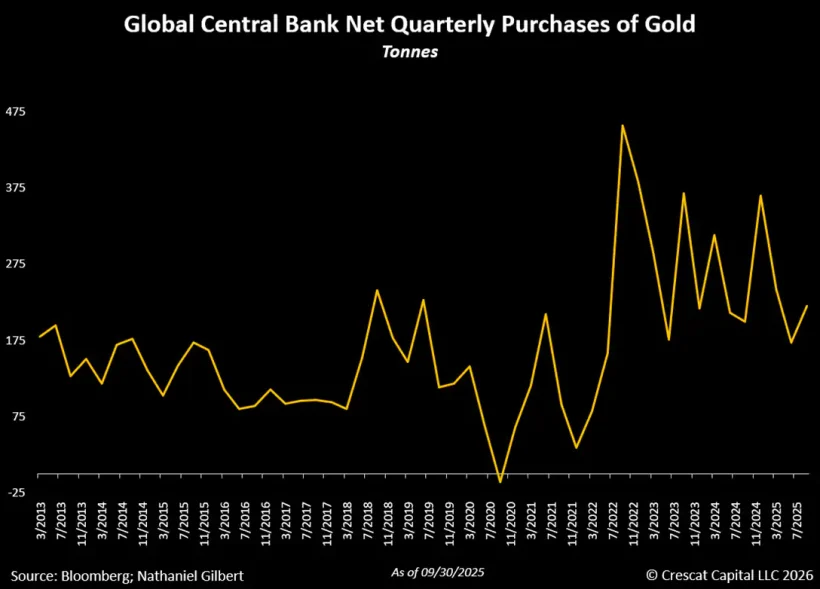
Since mid-2022, global central banks have been rebuilding their gold reserves, with net quarterly purchases coming in well above the average from the prior decade. This sustained, elevated level of central bank demand has helped provide gold’s bull market with both momentum and structural support. In our view, this accumulation is not a short-lived trend, but rather a continued effort by central banks to reposition reserve assets in a changing global monetary environment
Plummeting US Dollar Share of Global FX Reserves
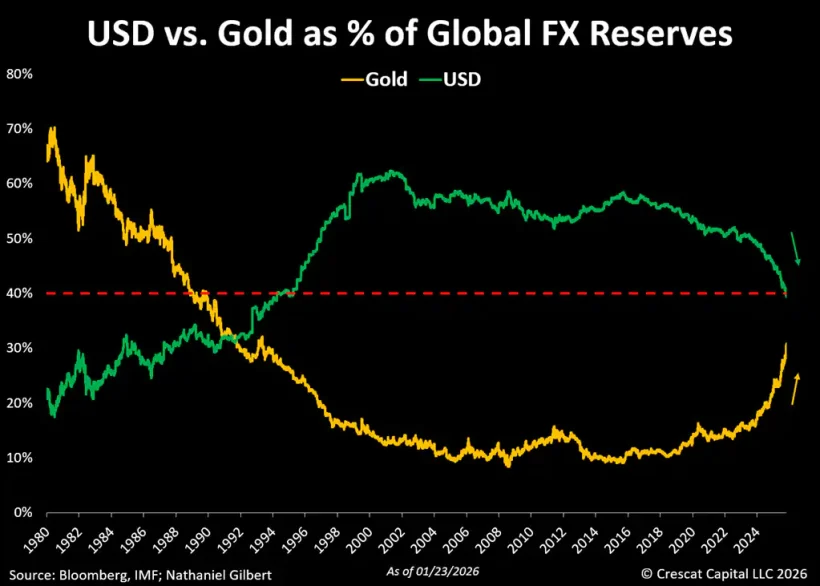
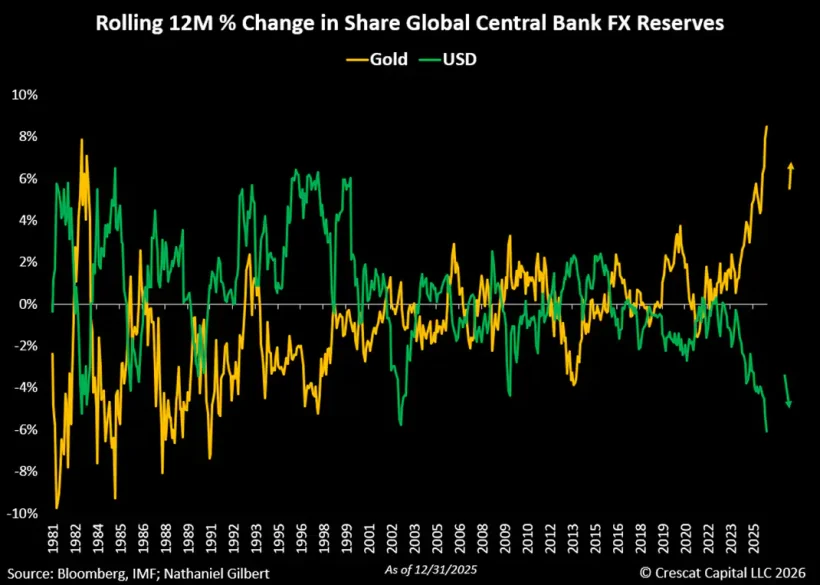
The shift is increasingly visible in reserve composition data. On January 20th, 2026, the U.S. dollar’s share of global foreign exchange reserves fell below 40%, and on the following day, gold surpassed 30% of global FX reserves. For context, the last time the dollar fell below the 40% threshold was more than 30 years ago, on June 29th, 1995. Framed differently, roughly half of the world’s current population is under 30 years old, meaning that as of January 19th, 2026, half of the people alive today had never lived through a period in which the dollar represented less than 40% of global reserves. This is not a marginal datapoint; it is a historical shift that underscores how dramatically the reserve landscape is evolving.
Central Banks Lead Charge to a New Gold Standard
We believe this decline in the dollar’s reserve dominance alongside the rise in gold is not a short-term anomaly. Rather, it is indicative of a meaningful paradigm shift. In our view, central banks are increasingly acknowledging both the limitations and the embedded risks of reserve concentration in fiat currencies, particularly in an era characterized by higher sovereign debt burdens, heightened geopolitical fragmentation, and a growing desire for reserve resilience. If the current trend holds steady, gold reserves expanding 8.4% monthly on a YoY basis and dollar shrinking by 6.1%, gold will surpass the dollar to become the largest FX reserve before the end of 2026, assuming current prices.
Early in the M&A Cycle
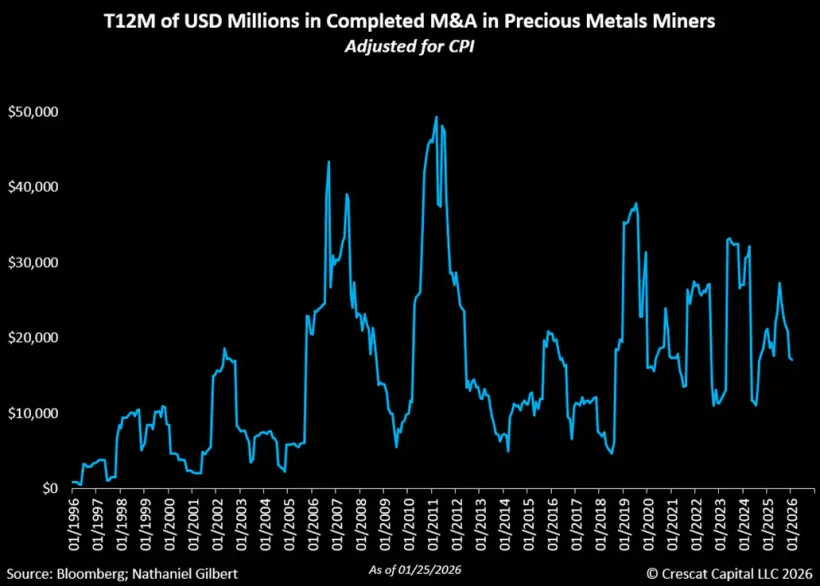
The chart below was created from 3,483 completed M&A deals in precious metals miners starting in 1995. We took the announced total value of the transaction and adjusted it by Consumer Price Index (CPI) to get the dollar value as of 12/31/2025. What stands out is that current M&A activity remains well below the peak levels seen during the prior major cycle that ultimately culminated in 2011. We believe the lack of aggressive consolidation suggests the industry may still be in the early stages of its strategic re-rating, and that the M&A cycle itself may not have meaningfully begun.
Favorable Backdrop for Explorers
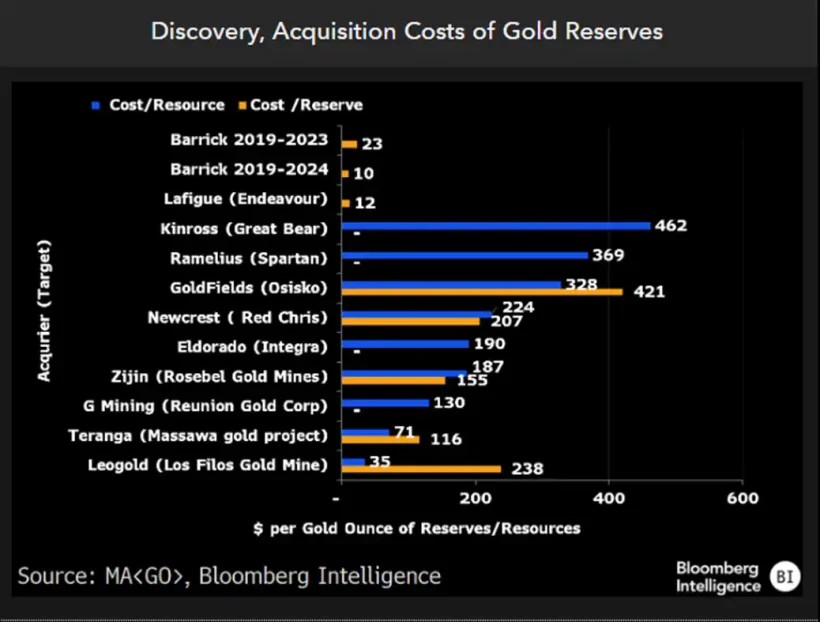
Research from Bloomberg Intelligence indicates that there could be a pick-up in acquisitions of exploration-stage companies in 2026, where Crescat’s activist metals portfolio is heavily focused. According to their research, Barrick’s exploration track record demonstrates that discovery costs range from $10-$30 an ounce of gold reserve. In contrast, the purchase price of late-stage development projects is $116-$421 a reserve ounce. The wide range in the acquisition price of a development-stage project is a reflection of jurisdiction and the complexity of extraction.
Crescat may or may not hold positions at any given time in the securities referenced. This is not a recommendation or endorsement of any secure or other financial instrument. Investing involves risk, including risk of loss.
Early in the Capex Cycle
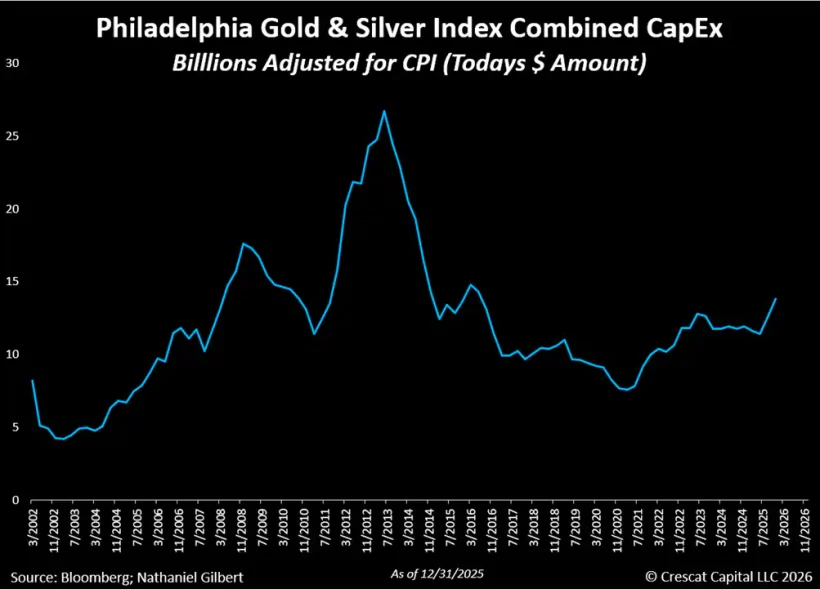
In our view, unlike the tech industry today, it is still very early in the capex growth cycle for mining stocks, as illustrated in the chart below. In our analysis, we have many years ahead of us with favorable tailwinds for the mining stocks, with a backdrop of unsustainable global debt and deficits, and necessary inflation. Meanwhile, demand for metals has been skyrocketing from central banks, re-industrialization, electrification, data centers, and defense. There is a structural global metals shortage after more than a decade of underinvestment in exploration and development. We don’t believe the market fully appreciates the 15-year lead times on average to take a metal deposit from discovery into production. We are confident that these imbalances will benefit our activist-oriented metals portfolio for years to come.
Past performance does not guarantee future results. Investing involves risk, including risk of loss. See additional important disclosures below.
5 of the Top 16 Hedge Funds in 2025
As of 1/31/2026, all five of Crescat’s funds ranked among the top 16 hedge funds for full-year performance in 2025. This recognition is among 2,357 hedge funds globally according to Preqin, a leading independent provider of alternative asset data and analytics.
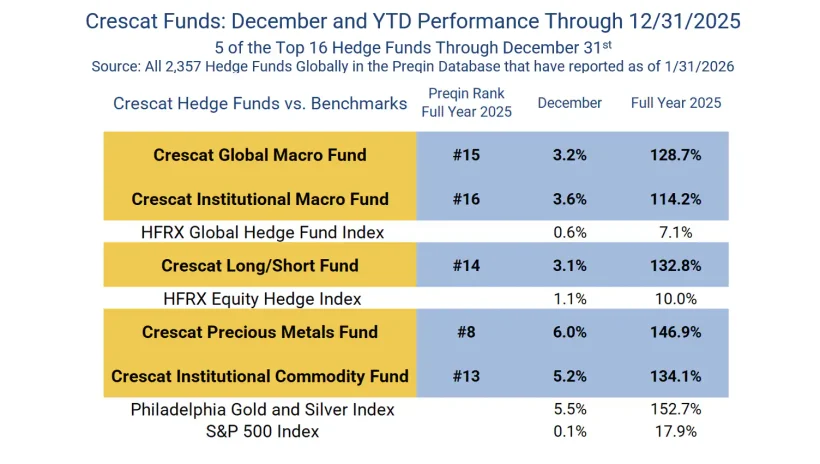
The most recent month’s performance is based on estimates which may change. Past performance does not guarantee future results. Net returns reflect the reinvestment of dividends and earnings and the deduction of all expenses and fees (including the highest management fee and incentive allocation charged, where applicable). Data shown is generated by Preqin, a leading provider of data and intelligence for the alternative assets industry. Fund managers, including Crescat, report their performance information to Preqin. Crescat pays an annual fee to Preqin to have access to the database, which gives us the ability to generate this report. The rankings are versus all 1,142 hedge funds in the Preqin database and YTD performance updated through December 2025 as of 1/21/2026. No award or ranking should be construed as a guarantee that you will experience a certain level of results, nor should it be construed as a current or past endorsement of Crescat. Additional important disclosures are found below.
Crescat Precious Metals Fund
#1 Performing Out of All 13 Natural Resource Hedge Funds in eVestment
#6 Performing Out of All 2,040 Sector Focused Hedge Funds in eVestment
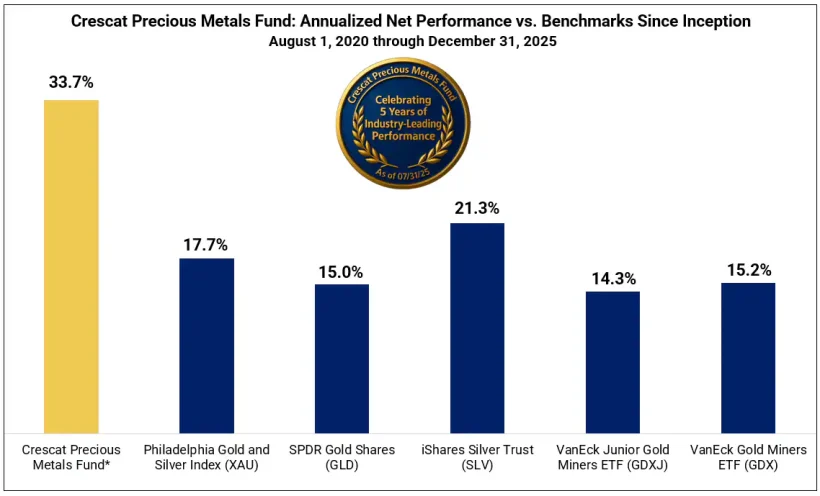
Based on performance since Crescat Precious Metals Fund inception (August 1, 2020) fund universe includes all natural resource and sector-focused funds in the eVestment database. *See important disclosures below. Past performance does not guarantee future results. Investing involves risk, including risk of loss.
Crescat’s activist metals strategy—Crescat Precious Metals Fund and Crescat Institutional Commodity Fund—is focused on precious and critical metals mining. Based on our analysis, it is still early in the macro cycle for mining stocks today. We believe there is strong value and high future growth potential in the premier explorers and developers. In our analysis, we have many years ahead of us with favorable tailwinds for the mining stocks, with a backdrop of unsustainable global debt and deficits, and necessary inflation. Meanwhile, demand for metals has been skyrocketing from central banks, re-industrialization, electrification, data centers, and defense. There is a structural global metals shortage after more than a decade of underinvestment in exploration and development. We don’t believe the market fully appreciates the 15-year lead times on average to take a metal deposit from discovery into production. We are confident that these imbalances will benefit our activist-oriented portfolio for years to come.
Crescat Global Macro Fund Achieves 20 Years of Exceptional Performance
January 1, 2026, marked 20 years of our flagship Crescat Global Macro Fund, our most comprehensive strategy with exposure to all the firm’s macro themes. Why Choose Crescat’s Global Macro Hedge Fund?
- 20-Year Leading Track Record: Category-leadingannualized net return and downside capture ratio over multiple market cycles.
- All-Season Performance: The fund’s goal is to perform across bull, bear, and sideways markets.
- Low Correlation to Traditional Benchmarks: Provides important differentiation from the crowd.
- Active, High-Conviction Positioning: A multi-asset portfolio built around forward-looking macro themes.
- Global Opportunity Set: Ability to position long and short across geographies, sectors, and asset classes.
Strong Absolute Returns & Strong Downside Capture Ratio
Our two macro funds—Crescat Global Macro and Crescat Institutional Macro—along with the Long/Short Fund, are a way for investors to potentially capitalize on downturns in mega-cap tech as well as hedge against valuation risks in the S&P 500 and NASDAQ 100. The chart below, pulled from eVestment, highlights not only the Global Macro and Long/Short Funds’ exceptional returns over 20-years, but also the strength in down markets.
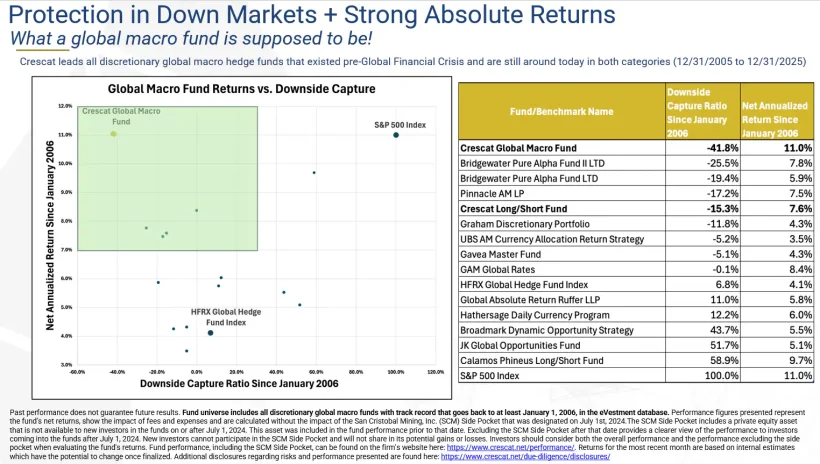
Based on performance since Crescat Global Macro Fund inception (January 1, 2006) fund universe includes all discretionary global macro funds in the eVestment database. Past performance does not guarantee future results. Investing involves risk, including risk of loss. See below for additional important disclosures.
Positive Returns in Down Markets
The downside capture ratio here shows how the Crescat Global Macro Fund performed on average since its inception during down months compared to the benchmark. A negative downside capture ratio shows that the fund gained on average in months when both the global hedge fund benchmark and the market went down. For example, a downside capture of minus 41.8% vs. the S&P 500 means that when the S&P 500 fell 10% on average, the fund gained 4.2%. Alternatively, a downside capture of minus 84.4% vs. the HFRX Global Hedge Fund Index illustrates that the fund gained 8.4% on average when that index fell 10%.
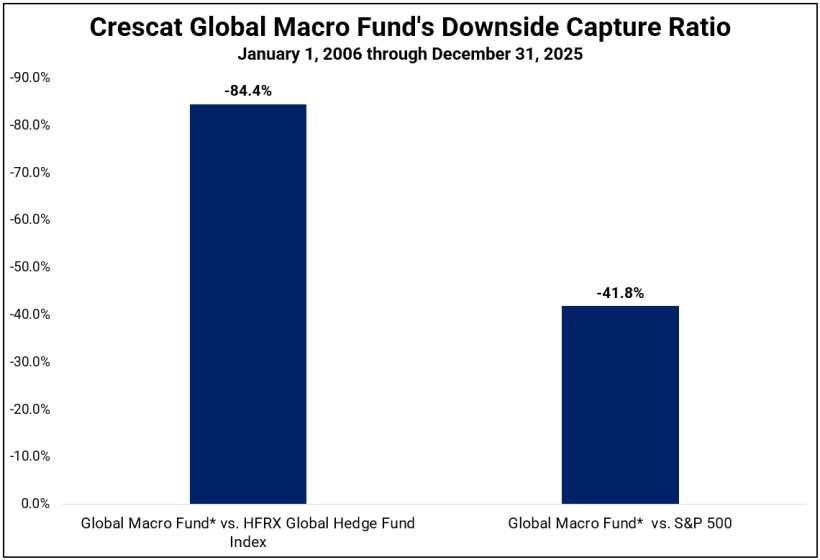
Past performance is not a guarantee of future returns, with the US stock market at record valuations and at risk of a major correction. *Performance figures presented represent the fund’s net returns calculated without the impact of the San Cristobal Mining, Inc. (SCM) Side Pocket that was designated on July 1st, 2024. The SCM Side Pocket includes a private equity asset that is not available to new investors in the funds on or after July 1, 2024. This asset was included in the fund performance prior to that date. Excluding the SCM Side Pocket after that date provides a clearer view of the performance to investors coming into the funds after July 1, 2024. New investors cannot participate in the SCM Side Pocket and will not share in its potential gains or losses. Investors should consider both the overall performance and the performance excluding the side pocket when evaluating the fund’s returns. Fund performance, including the SCM Side Pocket, can be found on the firm’s website here: https://www.crescat.net/performance/. Returns for the most recent month are based on internal estimates which have the potential to change once finalized. Additional disclosures regarding risks and performance presented are found here: https://www.crescat.net/due-diligence/disclosures/
Why Invest Now?
- Valuations Are Stretched:S. equity markets appear historically overvalued amid rising geopolitical tension.
- Thematic Rotation Is Underway: Investors are beginning to move away from over-owned mega-cap tech into undervalued, inflation-protected sectors.
- Commodities Are Just Getting Started: Crescat offers unique exposure to activist precious and critical metals investments.
- Shorting Opportunities Abound: Our Macro and Long/Short funds actively seek to profit from speculative excess in overvalued sectors.
- Positioned for an Inflationary Decade:Our models point toward long-term structural inflation and a declining US dollar, favoring hard assets, foreign equity exposure, and selective industries.
How Can I Get Involved?
If you are interested in investing in any of our strategies, we encourage you to reach out to Crescat’s Head of Investor Relations, Marek Iwahashi, at miwahashi@crescat.net. For more information, you are welcome to review the fund’s fact sheets and performance reports, presentation decks, or schedule a call with our team to discuss how Crescat’s strategies may fit in your portfolio. For those interested in our most up-to-date views on the markets, macro environment, and our highest-conviction mining positions, we encourage you to watch our recent Crescat Live Market Call videos.
Crescat 2025 Hedge Fund Performance
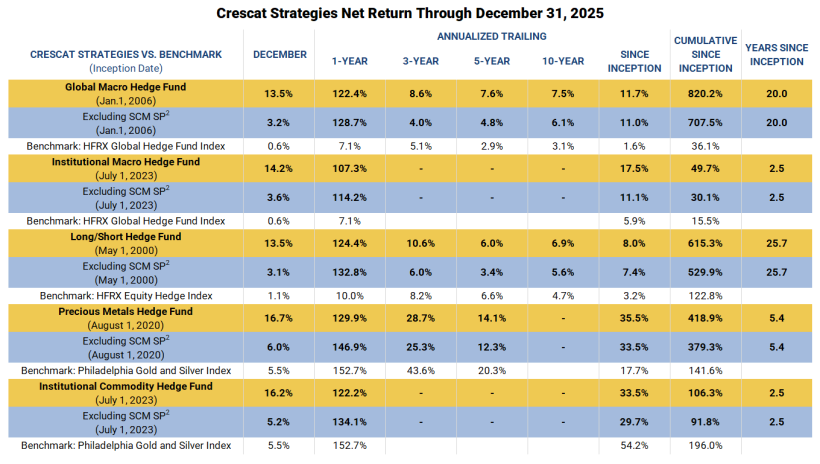
Past performance does not guarantee future results; Investing involves risk, including risk of loss. See additional important disclosures below.
January 2026 Strong Performance
Crescat finished a very strong January across all its hedge funds, substantially outperforming the S&P 500 Index and all the precious metals benchmarks for the month, even after the big gold market pullback on Friday. We will have full January performance estimates available on Monday for all who inquire.
Sincerely,
Kevin C. Smith, CFA
Founder & CEO
Nathanial Gilbert
Analyst
For more information, including how to invest, please contact:
Marek Iwahashi
Head of Investor Relations
miwahashi@crescat.net
(720) 323-2995
Linda Carleu Smith, CPA
Co-Founder & Chief Operating Officer
lsmith@crescat.net
(303) 228-7371
© 2026 Crescat Capital LLC
Read more hedge fund letters here